
Brisbane winters have a reputation for being mild and mostly, that’s fair. But anyone who’s shivered through a 7°C northside morning knows that “mild” doesn’t mean comfortable. The problem is, most Brisbane homeowners don’t think about air conditioning heating until the cold actually arrives. By then, it’s too late to discover something isn’t working.
This guide walks you through exactly what to check, clean, and configure before winter hits. Whether you have a split system or ducted setup, these steps will help your air conditioning in Brisbane run efficiently when you need it most. The team at Integrated Trade Services are a licensed local crew servicing Brisbane northside and surrounding suburbs and this advice comes straight from their experience on the tools.
#1. Why Winter Prep Matters
Why Brisbane Homeowners Should Service Their AC Before Winter Not During It
The most common story we hear goes like this: the first cold snap hits in May, someone switches on heating mode for the first time in eight months and nothing happens. Cue a frantic call for help during the busiest period of the year.
Proactive preparation avoids that entirely.
What Happens to Your AC System During Brisbane's Long Summers?
Your system works hard for eight to nine months in cooling mode. Filters collect a full summer’s worth of dust, pollen, and humidity. Outdoor units cop debris from Brisbane’s storm season. And the reversing valve, the component that switches the system to heating mode, may not have been tested since last winter.
Asking that system to suddenly heat your home, without any preparation, is how faults happen.
The Real Cost of Skipping an Annual Air Conditioner Service in Brisbane
Skipping an air conditioner service in Brisbane doesn’t save money, it defers costs. A system running with clogged filters or low refrigerant uses significantly more electricity to produce less heating output. Manufacturer warranties can also be voided by missed servicing requirements.
More importantly, a $150 to $200 routine service can catch a $600 to $1,500 repair before it develops. The maths is straightforward.
#2. DIY Prep Checklist
The Brisbane Homeowner's Pre Winter AC Checklist: What You Can Do Yourself
These are the practical steps you can take safely, without tools or trade qualifications. Work through them in order ideally three to four weeks before you actually need heating.
Switch to Heating Mode and Test Your System Early
Don’t wait for a cold night. Switch your system to “heat” or “auto” mode now, set the temperature above your current room temperature, and let it run for 20 to 30 minutes.
Normal startup looks like this: a brief delay before warm air flows which is normal, the outdoor unit running steadily, and no unusual noises or smells. Watch for anything that doesn’t fit error codes, cold air blowing despite heat mode, or the system switching off before the room warms up.
Testing early gives you time to address any issues before the cold arrives.
Clean or Replace Your Air Conditioning Filters
Cleaning your filters is the single most impactful thing you can do yourself. Dirty filters force the system to work harder, reduce heating output, and can trigger safety shutdowns, which is why it’s essential to regularly clean air conditioning filters.
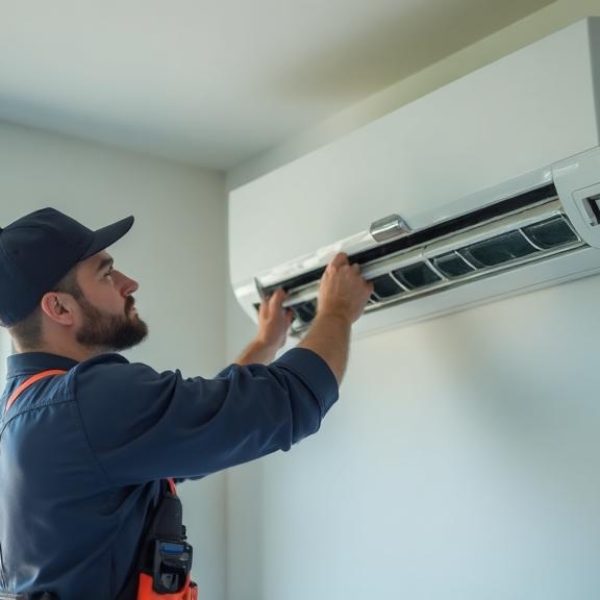
For ducted systems, the filter is usually behind the return air grille on the ceiling or wall. For split systems, it’s inside the indoor unit behind the front panel.
Remove the filter carefully and hold it up to the light. If you can’t see through it clearly, it needs attention. Wash it gently with warm water and mild detergent, rinse thoroughly, and let it dry completely before reinserting. Never reinstall a damp filter.
If the filter is torn, saturated with mould, or hasn’t been cleaned in over a year, replace it.
Inspect and Clean the Indoor Unit Split System
Wipe down the exterior casing with a damp cloth and check that the louvres move freely. Open the front panel and inspect the evaporator coil for visible dust or mould build up.
A musty smell when the system starts up usually means mould on the coil or in the drain tray. This won’t go away on its own. Book a professional coil clean, it makes a significant difference to both air quality and performance.
Don’t attempt to clean the coil yourself with household sprays. Incorrect products can damage the fins and void your warranty.
Check the Outdoor Unit for Storm Season Damage and Debris
Brisbane’s storm season can leave condenser units in rough shape. Head outside and give the unit a proper once-over. Clear any leaves, dirt, or debris from around the casing and make sure there’s at least 500mm of clearance on all sides. Check that the unit is still sitting level on its mounting pad, inspect the fins for visible damage or bending, and confirm that garden growth, fencing, or stored items haven’t crept too close. If the unit is dusty, a gentle rinse with a garden hose is fine, but never use a high-pressure hose on the fins, as this causes damage.
Check All Vents, Grilles, and Zones Ducted Systems
Walk through every room and confirm that supply air vents are unobstructed. Furniture, curtains, and stored boxes are common culprits especially in spare rooms that haven’t been used recently.
Also confirm that the return air grille is clear and that zone dampers are set correctly for the rooms you actually want to heat. Closing too many zones simultaneously creates pressure issues that can damage the system over time. Check your system manual for the minimum number of zones required to be open at any time.
Review Your Thermostat and Zone Controller Settings
For heating to activate, the set temperature must be above the current room temperature. This sounds obvious, but it’s one of the most common calls technicians receive.
Check any timers or schedules that may still be running summer programming. Look for “holiday mode” or “economy” settings that might be capping output. If you have a smart system, confirm the app is connected and that firmware is up to date.
Note Any Unusual Smells, Sounds, or Error Codes
During your test run, pay close attention to anything out of the ordinary. A burning smell on first startup is often just dust burning off, usually harmless, but worth watching carefully over the first few minutes. A persistent musty odour is a different story that typically points to mould in the coil or drain tray and warrants a professional clean. If the outdoor unit is rattling or vibrating, there may be debris inside the casing or the mounting has come loose. And if any error codes appear on the display, write them down before calling a technician; it speeds up diagnosis considerably. Any symptom that persists or worsens is not DIY territory. These are signals to book a service.
#3. Optimising for Heating Performance
A clean, well serviced system is only part of the equation. Using it efficiently matters too.
Setting the Right Temperature for Brisbane Winters
The sweet spot for reverse cycle heating in Brisbane is 20 to 22°C. Setting the thermostat higher doesn’t heat the room faster, it just runs longer and uses more energy. Overnight, a setback temperature of 18°C is comfortable for most households and reduces running costs meaningfully.
Programme your schedule to match how you actually live in warm living areas in the evening, bedrooms overnight if needed, and a preset morning warm up before you get out of bed.
Using Zones Smartly to Reduce Running Costs
Ducted system owners have a real advantage here. Heat only the rooms in active use there’s no benefit in warming a guest room nobody’s sleeping in.
Set zone schedules to have the main living areas warm before you arrive home, and bedrooms warm before bedtime. This combination of smart zoning and sensible scheduling can cut running costs noticeably without sacrificing comfort.
Why Your Reverse Cycle System Is More Efficient Than You Think
Many Brisbane homeowners assume ducted heating is expensive to run. In reality, reverse cycle systems are among the most efficient heating options available.
For every unit of electricity consumed, a modern reverse cycle system delivers three to five units of heat energy because it extracts heat from outside air rather than generating it from scratch. For Brisbane’s mild winters, running costs are generally very reasonable when the system is well maintained and used sensibly.
Comparing Heating Options for Brisbane Homes: Reverse Cycle vs. Space Heaters
Portable space heaters convert one unit of electricity to one unit of heat that’s 100 percent efficient at best. A reverse cycle system operates at 300 to 500 percent effective efficiency. Over a winter season, the difference in running costs is significant. For homeowners without an existing ducted air conditioning installation on Brisbane’s northside, the investment typically pays back well within the system’s lifespan.
#4. When DIY Isn't Enough
When to Book a Professional Air Conditioner Service in Brisbane Before Winter
Some things genuinely require a licensed technician. Here’s how to know when DIY isn’t enough.
Signs Your AC Needs a Professional Service Before Winter
Book a professional service if you notice any of the following:
- Heating mode isn’t engaging despite correct settings
- Airflow is noticeably reduced even after filter cleaning
- Unusual noises from either the indoor or outdoor unit
- A musty or burning smell that persists beyond the first few minutes of operation
- Error codes that reappear after being cleared
- The system short cycles switching on and off rapidly
- Visible ice on the outdoor unit or refrigerant lines
- The system hasn’t been professionally serviced in over 12 months
None of these are failures on your part. They’re normal maintenance indicators and catching them early keeps repair costs down.
What's Included in a Professional AC Winter Service?
A thorough professional service covers what DIY simply can’t: refrigerant level check, electrical component inspection, chemical coil clean, drain line flush, thermostat and sensor calibration, capacitor and contactor testing, and a full heating mode performance test.
For ducted systems, a proper service also includes a ductwork integrity check something that’s frequently missed in a basic filter clean.
Why Choose ITS for Your Air Conditioning Service on Brisbane's Northside?
Ducted systems in particular require both refrigeration and electrical expertise in the same visit. Integrated Trade Services holds dual licences across both trades which means one call, one team, complete job.
Servicing Brisbane northside and surrounding suburbs, ITS offers free no obligation quotes and transparent pricing before any work begins. Book before the cold season rush autumn availability fills quickly. Get in touch here.
Thinking About Upgrading?
“Is It Time to Upgrade or Install a New Ducted Air Conditioning System Before Winter?”
Sometimes a service isn’t enough. If your system is ageing or your home doesn’t have ducted air conditioning at all, winter is a good time to consider an upgrade.
How to Know if Your Ducted System Is Worth Repairing or Ready to Replace
A practical rule of thumb: if the system is over 12 to 15 years old and the repair cost exceeds 50 percent of a new system’s installed price, replacement is likely the smarter investment. Modern systems offer significantly higher energy star ratings, inverter technology, and smart zone control all of which deliver real running cost savings year round.
What to Expect from a New Ducted Air Conditioning Installation in Brisbane Northside
The process is more straightforward than most homeowners expect. A site assessment determines the right system size for your home. ITS handles brand selection advice, supply, full installation, and commissioning, covering both the refrigeration and electrical components in a single visit. Free quotes are available with no obligation.
Contact Integrated Trade Services today to get started with expert advice and a tailored solution for your home.
Frequently Asked Questions: Air Conditioning and Winter Preparation in Brisbane
When should I service my air conditioner in Brisbane before winter?
Late February or March is ideal after the summer peak and well before the first cold snap. Autumn is the sweet spot: technicians are less busy, and you have time to address any faults before you actually need heating.
How often should I clean my air conditioning filters in Brisbane?
Every four to six weeks during heavy use, or at minimum before switching between seasons. Brisbane’s humid climate means dust and mould accumulate quickly especially in homes with pets or near construction.
Why is my reverse cycle air conditioner not heating effectively?
The most common causes are dirty filters, incorrect settings, a refrigerant issue, or a faulty reversing valve. Run through the DIY checklist above first. If the problem persists, book a technician.
Is reverse cycle air conditioning efficient for Brisbane winters?
Yes it’s one of the most energy efficient options available. Reverse cycle systems deliver three to five units of heat for every unit of electricity consumed, making them far more economical than portable heaters for whole home comfort.
Can I service my air conditioner myself, or do I need a licensed technician?
Homeowners can safely clean filters, clear debris, check settings, and do a visual inspection. Anything involving refrigerant, electrical components, or internal coil cleaning requires a licensed technician. Refrigerant work without a licence is illegal in Australia.
How long does a professional air conditioner service take in Brisbane?
A split system service typically takes 45 to 90 minutes. A ducted system service takes 1.5 to 3 hours depending on the number of zones and the system’s current condition.
How much does air conditioning installation cost in Brisbane northside?
Costs vary based on system type, size, and property layout. Split systems are generally more affordable upfront, ducted systems are a larger investment but add whole home comfort and property value. ITS provides free, no obligation quotes so you can make an informed decision.
What's the best air conditioning brand for Brisbane homes?
It depends on your home’s size, layout, and budget. Leading brands used across Brisbane include Daikin, Mitsubishi Electric, Fujitsu, and ActronAir. ITS can recommend the best fit for your specific needs and install all major brands.